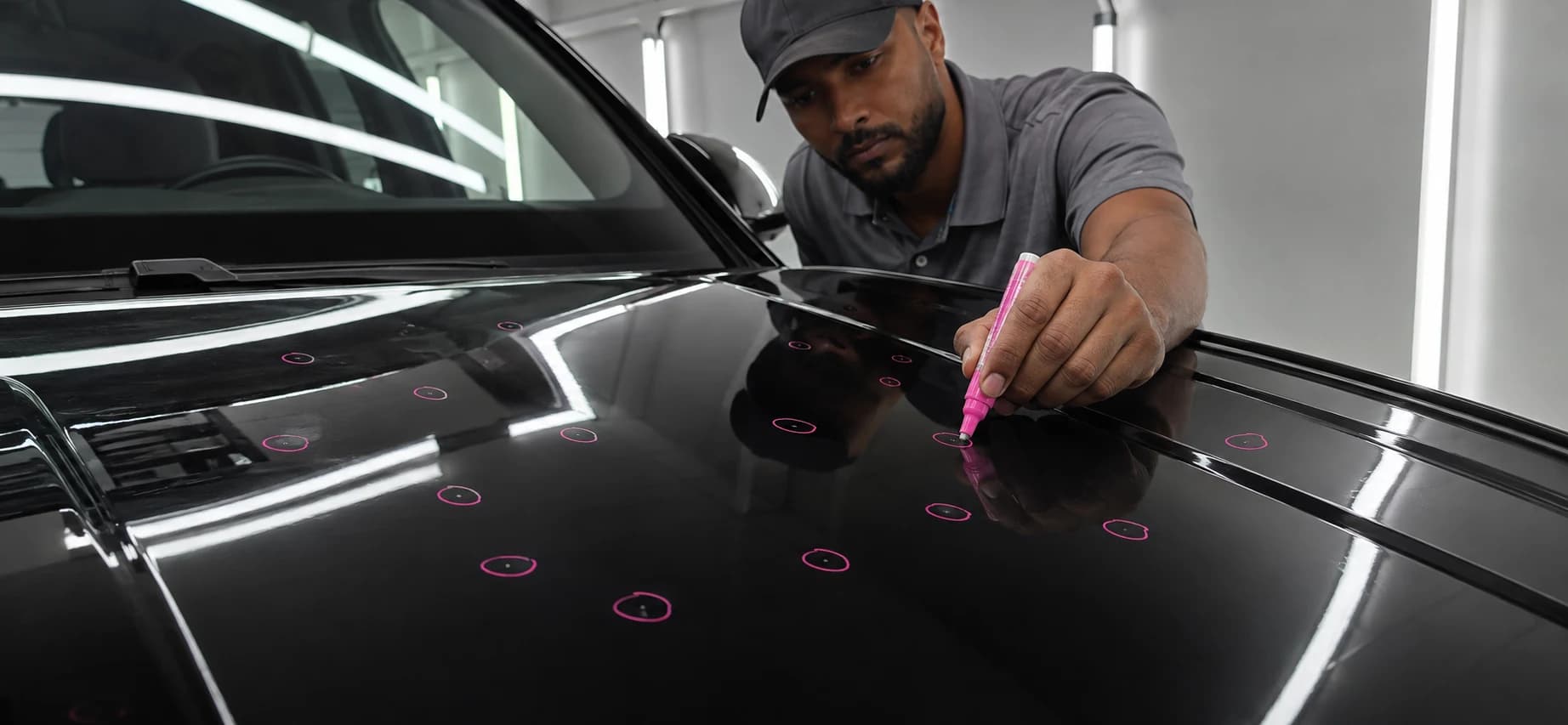
Before you zoom in on dents, establish the vehicle. That simple idea was at the heart of our earlier inspection guide, and it works anywhere in the country. Clear photos help explain what you can see and give a repair professional a useful place to start.
1. Full-vehicle context shots
Take a photo from each corner, far enough back to include the whole car. Note the year, make and model alongside the pictures. Save the approximate storm time and location in the same folder so the record stays together.
2. Let the light show the panel
Dents can disappear in one reflection and become obvious in another. Try soft, even light and move your viewing angle across the panel. Take one wider view of the hood, roof or trunk, then closer views of damage you can see. Do not climb onto the vehicle or stand in a dangerous position to reach the roof.
3. Keep scale and detail together
A ruler held nearby can provide useful scale without touching or scratching the paint. Save both the close view and its wider companion. Avoid filters, heavy contrast adjustments or drawing over the original file; make an annotated copy if you need to point something out.
4. Include glass, trim and water intrusion
Photograph visible chips, cracks, damaged trim and signs of water entering through broken glass. Record what you observe without assuming a specific cause or repair. An inspection should connect the findings to the proposed work.
5. Add a short walkaround
A slow video can show how a reflection changes as you move. Keep it steady and pause at panels that concern you. Ask your insurer or repair contact which file types they accept and how they want the originals delivered.
What photos can—and cannot—do
Photos support a conversation; they do not guarantee claim approval, a particular settlement or a repair method. Comprehensive coverage commonly addresses weather damage, but your own policy and deductible determine the insurance details. Confirm those directly with your insurer.
Bring your photos, existing estimate and questions to the inspection. Ask the estimator to explain any areas that need a closer look. A useful record is organized and honest—not a contest to make a dent look larger.